

Drill
Attention + Resting Postions
Attention
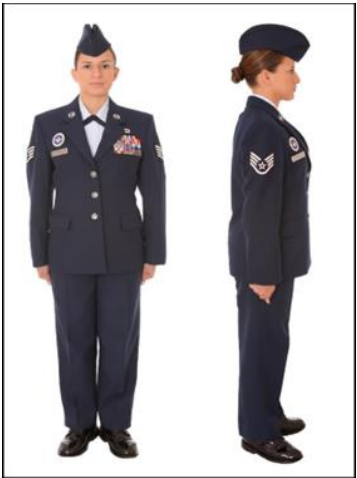
Position of Attention. To come to attention, bring the heels together smartly and on line. Place the heels as near each other as the conformation of the body permits, and ensure the feet are turned out equally, forming a 45-degree angle. Keep the legs straight without stiffening or locking the knees.
The body is erect with hips level, chest lifted, back arched, and shoulders square and even. Arms hang straight down alongside the body without stiffness, and the wrists are straight with the forearms.
Place thumbs, which are resting along the first joint of the forefinger, along the seams of the trousers or sides of the skirt. Hands are cupped (but not clenched as a fist) with palms facing the leg.
The head is kept erect and held straight to the front with the chin drawn in slightly so the axis of the head and neck is vertical; eyes are to the front, with the line of sight parallel to the ground.
Pronunciation Flight “TENCH HUT “
Parade Rest
Parade Rest.
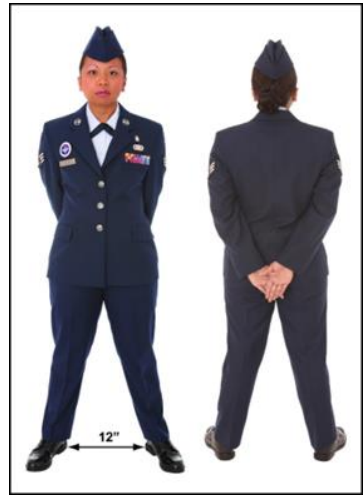
On the command Parade REST, the airman will raise the left foot from the hip just enough to clear the ground and move it smartly to the left so the heels are 12 inches apart, as measured from the inside of the heels.Keep the legs straight, but not stiff, and the heels on line. As the left foot moves, bring the arms, fully extended, to the back of the body,
uncupping the hands in the process; and extend and join the fingers, pointing them toward the ground. The palms will face outwards. Place the right hand in the palm of the left, right thumb over the left to form an "X" Keep head and eyes straight ahead.
PRONUCIATION - PARADE HEST
Facing Movements
Right/Left Face
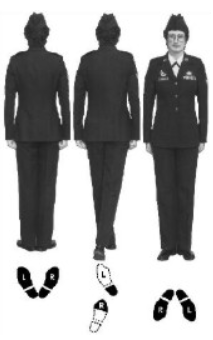
Right (Left) Face. The commands are Right (Left), FACE. On the command FACE, raise the right (left) toe and left (right) heel slightly and pivot 90 degrees to the right (left) on the ball of the left (right) foot and the heel of the right (left) foot, assisted by slight pressure on the ball of the left (right) foot. Keep legs straight, but not stiff
The upper portion of the body remains at attention. This completes count one of the movement. Next, bring the left (right) foot smartly forward, ensuring heels are together and on line. Feet should now be forming a 45-degree angle, which means the position of attention has been resumed. This completes count two of the movement.
PRONUCIATION “RIGHT/LEFT HACE”
Half Right/Left Face
Follow the same instructions above but pivot 45 degrees instead of 90.
About Face
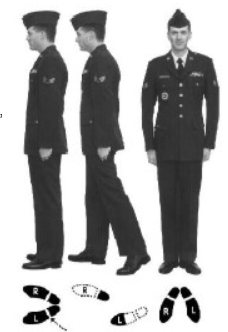
About Face. The command is About, FACE. On the command FACE, lift the right foot from the hip just enough to clear the ground. Without bending the knees, place the ball of the right foot approximately half a shoe length behind and slightly to the left of the heel.
Distribute the weight of the body on the ball of the right foot and the heel of the left foot. Keep both legs straight, but not stiff. The position of the foot has not changed. This completes count one of the movement.
Keeping the upper portion of the body at the position of attention, pivot 180 degrees to the right on the ball of the right foot and heel of the left foot, with a twisting motion from the hips. Suspend arm swing during the movement, and remain as though at attention. On completion of the pivot, heels should be together and on line and feet should form a 45-degree angle. The entire body is now at the position of attention. This completes count two of the movement.
PRONUCIATION - ABOUT HACE
Saluting
Present Arms
The commands are Present, ARMS and Order ARMS. On the command Present, ARMS, the airman executes the first count of hand salute. Count two of hand salute is performed when given the command Order, ARMS.
PRONUCIATION- PRESENT HARMS
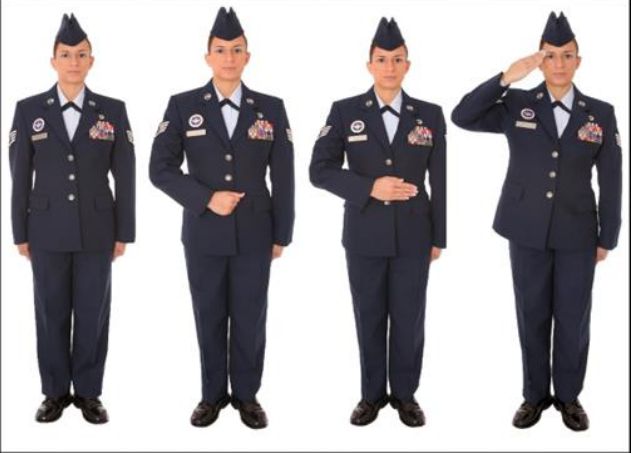
Eyes Right (Left) and Ready Front
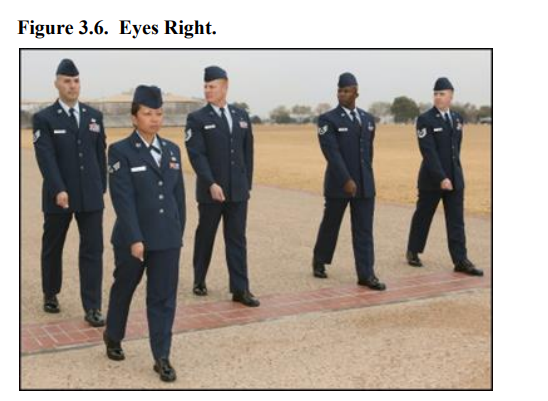
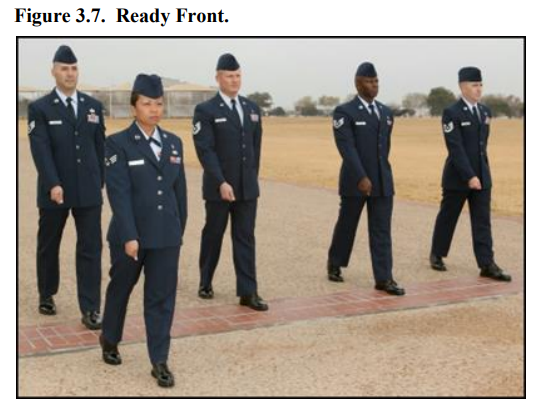
The commands are Eyes, RIGHT (LEFT) and Ready, FRONT. These commands may be given at a halt or while marching.
The preparatory command and command of execution are given on the right (left) foot while marching. On the command RIGHT (LEFT), all persons, except those on the right (left) flank, turn their heads and eyes smartly 45 degrees to the right (left).
To return their heads and eyes to the front, the command Ready, FRONT is given as the left (right) foot strikes the ground. On the command FRONT, heads and eyes are turned smartly to the front.
Marching
Forward March and Halt
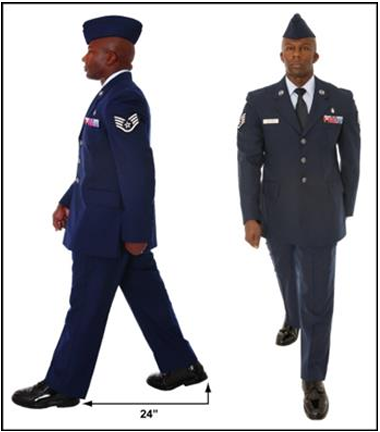
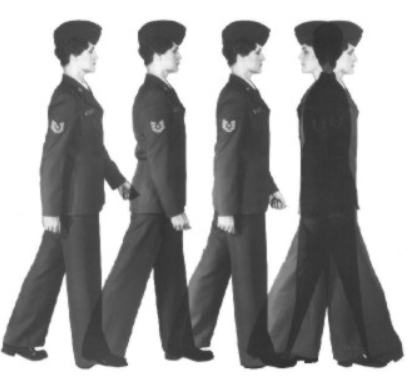
To march forward in quick time from a halt, the command is Forward, MARCH. On the command MARCH, the airman smartly steps off straight ahead with the left foot, taking a 24-inch step (measured from heel to heel), and places the heel on the ground first.
When stepping off and while marching, the airman will use coordinated arm swing; that is, right arm forward with the left leg and left arm forward with the right leg. The hands will be cupped with the thumbs pointed down. The arms will hang straight, but not stiff, and will swing naturally.
The swing of the arms will measure 6 inches to the front (measured from the rear of the hand to the front of the thigh) and 3 inches to the rear (measured from the front of the hand to the back of the thigh). If applicable, proper dress, cover, interval, and distance will be maintained. Proper cadence will be adhered to.
Count cadence as follows: counts one and three are given as the heel of the left foot strikes the ground, and counts two and four are given as the heel of the right foot strikes the ground.
To halt from quick time, the command is Flight, HALT, given as either foot strikes the ground. On the command HALT, the airman will take one more 24-inch step. Next, the trailing foot will be brought smartly alongside the front foot. The heels will be together, on line, and form a 45-degree angle. Coordinated arm swing will cease as the weight of the body shifts to the leading foot when halting.
Double Time
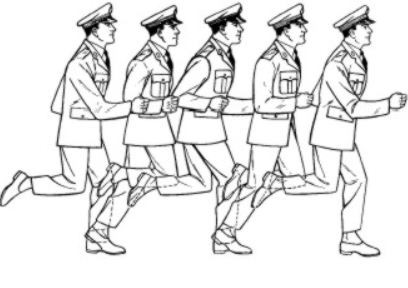
To march in double time from a halt or when marching in quick time, the command is Double Time, MARCH.
When halted and on the command MARCH, the airman begins with the left foot, raises the forearms to a horizontal position along the waistline, cups the hands with the knuckles out, and begins an easy run of 180 steps per minute with 30-inch steps, measured from heel to heel. Coordinated motion of the arms are maintained throughout.
When marching in quick time and on the command MARCH (given as either foot strikes the ground), the airman takes one more step in quick time and then steps off in double time.
To resume quick time from double time, the command is Quick Time, MARCH, with four steps between commands. On the command MARCH (given as either foot strikes the ground), the airman advances two more steps in double time, resumes quick time, lowers the arms to the sides, and resumes coordinated armswing.
To halt from double time, the command Flight, HALT is given as either foot strikes the ground, with four steps between commands. The airman will take two more steps in double time and halt in two counts at quick time, lowering the arms to the sides.
The only commands that can be given while in double time are Incline To The Right (Left); Quick Time, MARCH; and Flight, HALT.
Mark time
The command is Mark Time, MARCH. When marching, the command MARCH is given as either foot strikes the ground. The airman takes one more 24-inch step with the right (left) foot. He or she then brings the trailing foot to a position so both heels are on line. The cadence is continued by alternately raising and lowering each foot. The balls of the feet are raised 4 inches above the ground. Normal arm swing is maintained.
At a halt, on the command MARCH, the airman raises and lowers first the left foot and then the right. Mark time is executed in quick time only. The halt executed from mark time is similar to the halt from quick time.
To resume marching, the command Forward, MARCH is given as the heel of the left foot strikes the ground. The airman takes one more step in place and then steps off in a full 24-inch step with the left foot.
To resume marching, the command Forward, MARCH
Half Step
The command Half Step, MARCH is given as either foot strikes the ground. On the command MARCH, the airman takes one more 24-inch steps followed by a 12-inch step (measured from heel to heel) in quick time, setting the heel down first without scraping the ground. The airman maintains coordinated arm swing and continues the half step until marched forward or halted.
To resume a full 24-inch step, the command Forward, MARCH is given as the heel of the left foot strikes the ground. On the command MARCH, the airman takes one more 12-inch step with the right foot and then steps out with a full 24-inch step with the left foot.
The halt executed from half step is similar to the halt executed from a 24-inch step. The half step is not executed from the halt nor are changes of direction made from the half step. It is executed only in quick time, and normal arm swing is maintained.
Right/Left Step
The command is Right (Left) Step, MARCH, given only from a halt and for moving short distances. On the command MARCH, the airman raises the right (left) leg from the hip just high enough to clear the ground. The leg will be kept straight, but not stiff, throughout the movement.
The individual places the right (left) foot 12 inches, as measured from the inside of the heels, to the right (left) of the left (right) foot. Transfer the weight of the body to the right (left) foot, then bring the left (right) foot (without scraping the ground) smartly to a position alongside the right (left) foot as in the position of attention. This movement is continued in quick time; the upper portion of the body remains at attention and arms remain at the sides throughout.
Cadence may be counted during this movement. Counts one and three are given as the right (left) foot strikes the ground. Counts two and four are given as the heels come together.
To halt from the right (left) step, the preparatory command and command of execution are given as the heels come together. The halt from the right (left) step is executed in two counts. On the command HALT, one more step is taken with the right (left) foot and the left (right) foot is placed smartly alongside the right (left) foot as in the position of attention.
To halt from the right (left) step, the preparatory command and command of execution are given as the heels come together. The halt from the right (left) step is executed in two counts. On the commandHALT,
Sizing the Flight
Dress Right Dress
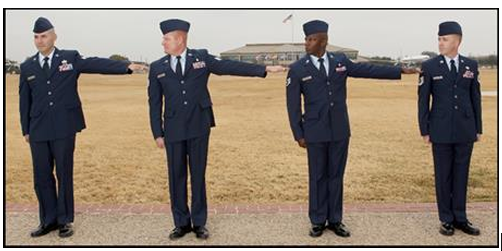
The commands are Dress Right, DRESS and Ready, FRONT. On the command DRESS, everyone except the last airman in each element raises and extends the left arm laterally from the shoulder with snap so the arm is parallel with the ground
As the arm is raised, uncup the hand at approximately waist level, keeping the palm down. Extend and join the fingers and place the thumb along the forefinger. At the same time as the left arm is raised, each individual (except the guide and second, third, and fourth element leaders) turns head and eyes 45 degrees to the right with snap.
The leading individual of each file establishes normal interval (by taking small choppy steps and aligning with the base file) and establishes exact shoulder-to-fingertip contact with the individual to the immediate right. The second, third, and fourth element leaders align themselves directly behind the person in front of them (using small choppy steps) and visually establish a 40-inch distance.
As the remaining members align themselves behind the individual in front of or to the right of them, their shoulders may or may not touch the fingertips of the individual to their right. If the arm is too long, place the extended hand behind the shoulder of the individual to the left. If the arm is too short, leave it extended toward the individual to the left and parallel to the ground.
Once dress, cover, interval, and distance have been established, the command Ready, FRONT will be given. On this command, airmen whose arms are up will lower their arms with snap to their sides (without slapping their sides) and recup their hands when their arm is at approximately waist level. As the arm is lowered, airmen whose heads are turned will return their heads to the front with snap. The body is now back to the position of attention.
Close Interval Dress Right Dress
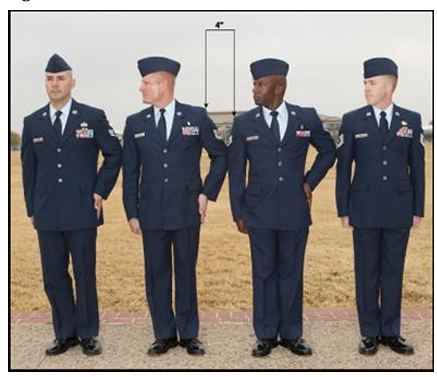
The command is At Close Interval, Dress Right, DRESS. On this command, all airmen except the last one in each element will raise their left hand so the heel of the hand rests on the left hip, fingers are extended and joined, thumb is along the forefinger, fingertips point toward the ground, and the elbow in line with the body.
At the same time the left hand is raised, all airmen except the guide and second, third, and fourth element leaders will turn their head and eyes 45 degrees to the right. First element airmen establish the interval by ensuring their upper right arm touches the extended elbow of the individual to their right.
The same procedures used to establish dress, cover, interval, and distance for normal interval will be used for close interval. At Close Interval, Dress Right (Left), DRESS is not given to a flight at normal interval, and Dress Right (Left), DRESS is not given to a flight at close interval.
Cover
Column Formation To align the flight in column, the command is COVER. On this command, everyone except the guide adjusts by taking small choppy steps if needed and establishes dress, cover, interval, and distance.
The leading individual of each file (excluding the base file) obtains the proper interval (normal or close). The base file establishes and maintains a 40-inch distance. All others align themselves beside the individual to their right and behind the individual in front of them.
4
Flight Formations
2
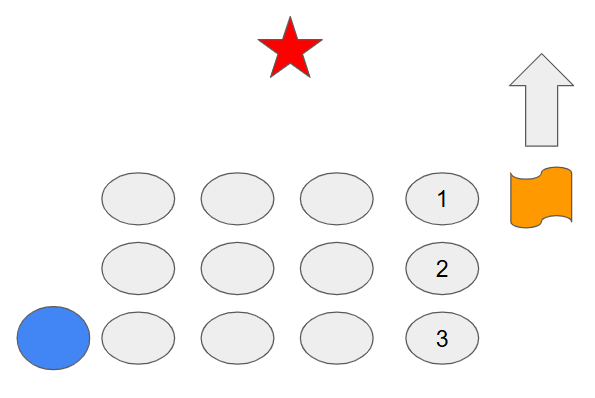
Line Formation
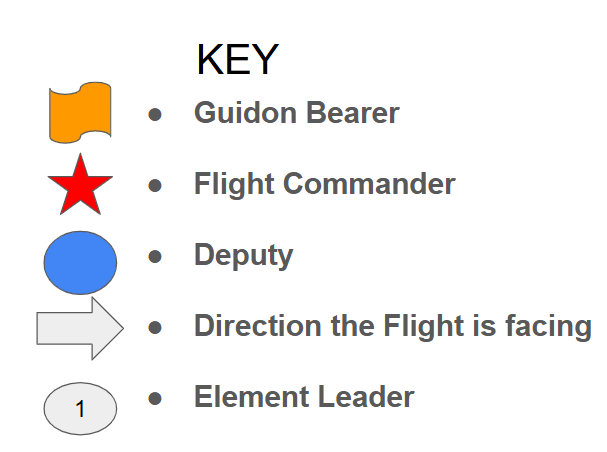
The arrangement of units one behind the other with the guide and element leader to the extreme right flank
The guidon bearer is in front of the farthest right of the formation
Position of the flight commander: six paces away and centered on the flight
When you fall a flight in, they fall into line formation
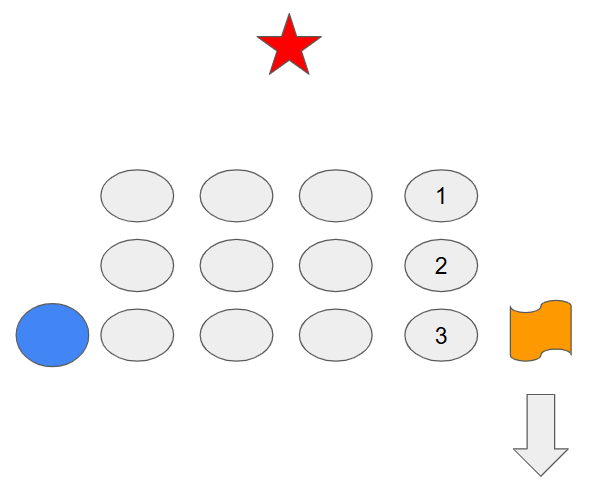
Inverted Line Formation
The arrangement of units one behind the other with the guide and element leaders to the extreme left flank
The guidon bearer is in the front of the farthest left of the formation
Position of the flight commander: six paces away and centered on the flight
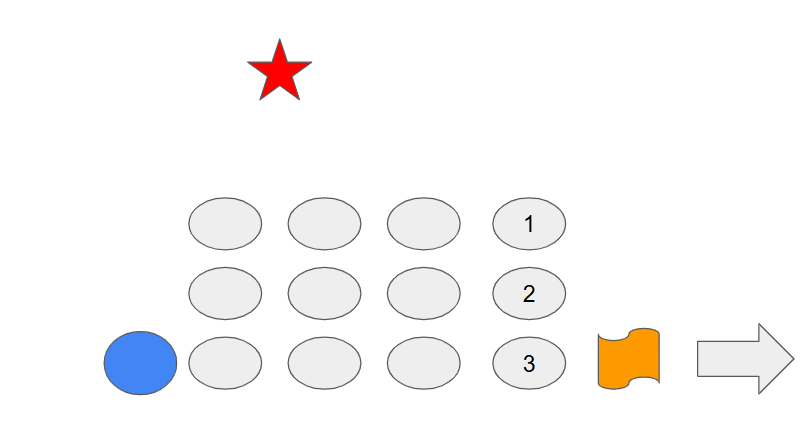
Column Formation
The arrangement of units side by side with guide and element leaders to the head
The guidon bearer is abreast and to the right of the first element leader at normal interval
Position of the flight commander: back third
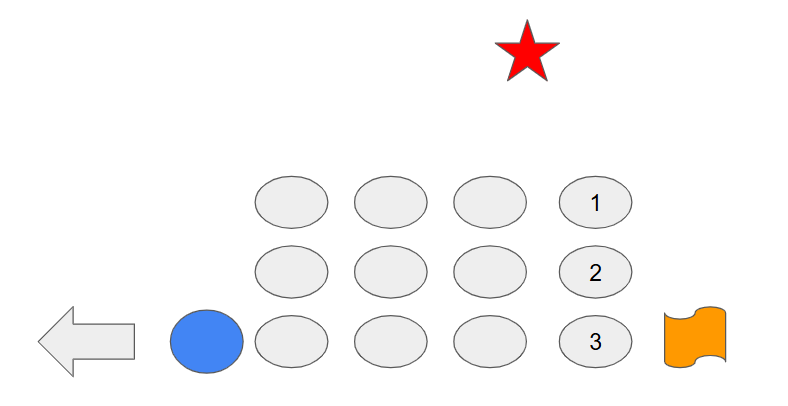
Inverted Column Formation
The arrangement of units side by side with guide and element leaders to the rear
Position of the flight commander: back third of the inverted flight
** Knowing where the Guideon bearer is positioned is key to knowing what formation you are in.
Column Movements
3
Column Right:
Third element: immediate 90° turn
Second element: pivot 45°, take two steps, pivot 45°
First element: pivot 45°, take four steps, pivot 45°
go into half steps after completing your turns and catching up to the flight
Column Left:
First element: immediate 90° turn
Second element: pivot 45°, take two steps, pivot 45°
Third element: pivot 45°, take four steps, pivot 45°
go into half steps after completing your turns and catching up to the flight
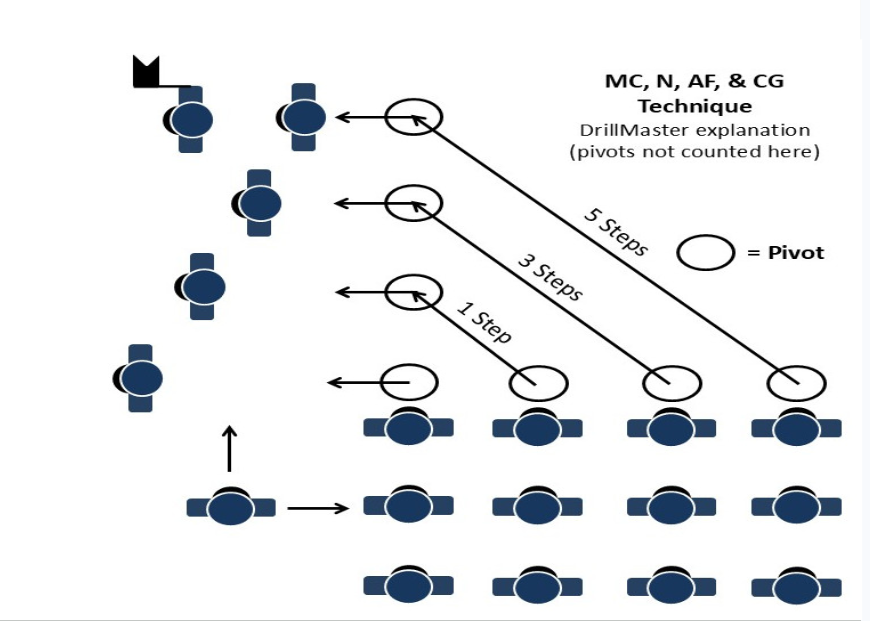
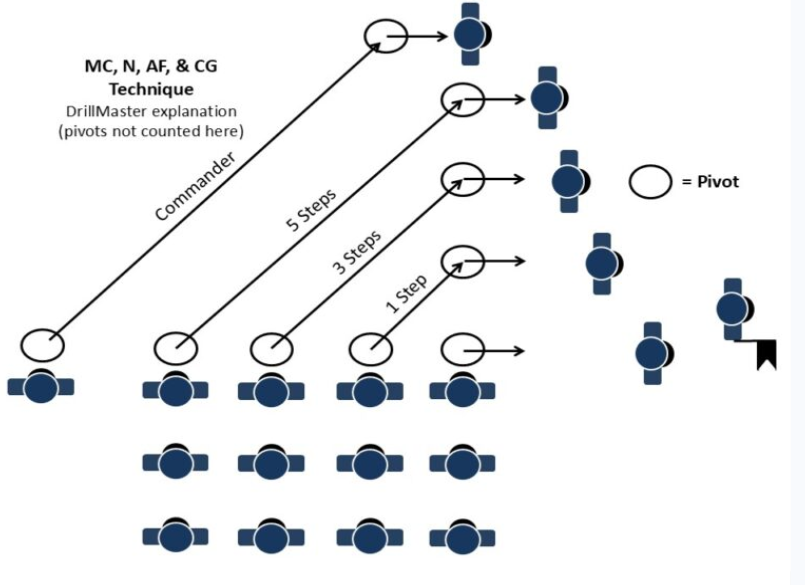
Flanking movements + To the rear
Right/left Flank March
The command is Right (Left) Flank, MARCH, given as the heel of the right (left) foot strikes the ground. On the command MARCH, the airman takes one more 24-inch step, pivots 90 degrees to the right (left) on the ball of the left (right) foot, keeping the upper portion of the body at the position of attention.
Then step off with the right (left) foot in the new direction of march with a full 24-inch step and coordinated arm swing. Arm swing is suspended to the sides as the weight of the body comes forward on the pivot foot.
The pivot and step off are executed in one count.
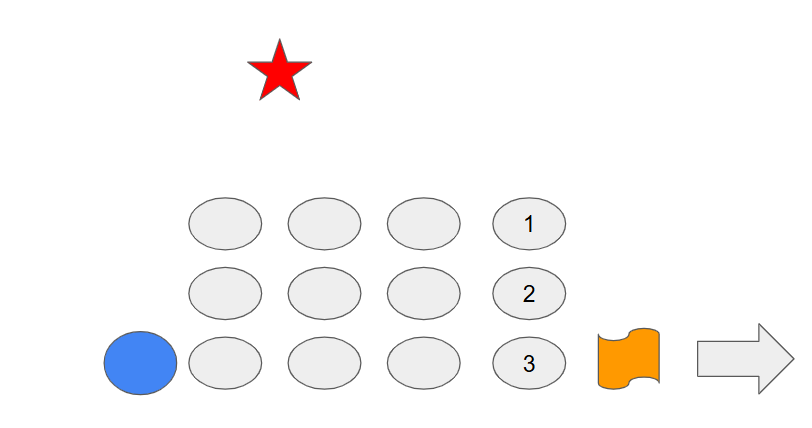
Right Flank March
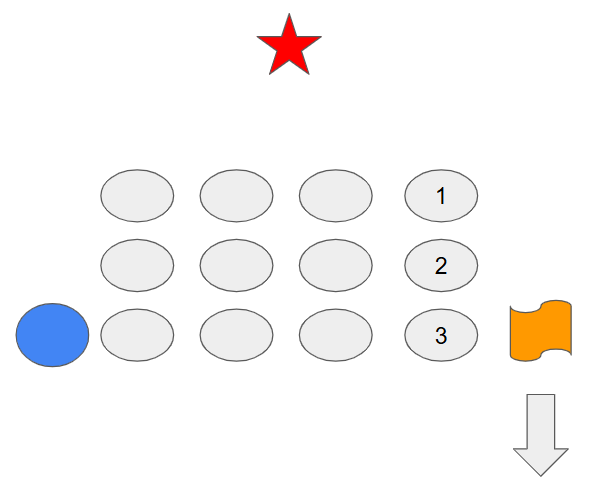
To The Rear March
The command is To the Rear, MARCH, given as the heel of the right foot strikes the ground. On the command MARCH, the airman takes a 12-inch step with the left foot, placing it in front of and in line with the right foot and distributes the weight of the body on the balls of both feet.
Then pivot on the balls of both feet, turning 180 degrees to the right, and take a 12-inch step with the left foot in the new direction, with coordinated arm swing, before taking a full 24-inch step with the right foot. While pivoting, do not force the body up or lean forward. The pivot takes a full count, and the arm swing is suspended to the sides as the weight of the body comes forward while executing the pivot, as if at the position of attention.
Flight Drill Evaluations (FDEs)
Expectation: Cadets are to demonstrate their ability to be directive and take ownership of a flight in a time and space constrained environment.
What to expect:
You will be handed a card with 20 drill movements that must be executed within 5 minutes the second you say your first command.
The flight will be in 2 elements.
The drill pad will be in a squared size. The dimensions vary.
You will have 1 minute to review the drill card and position your flight anywhere within the drill pad. The timer does not start until you return back to your flight and give the first command.
You must report in and out.
Reporting In Statement
“Sir/Ma’am, ____ Flight is prepared/ready for the flight drill evaluation”
Reporting Out Statement
“Sir/Ma’am, ____ Flight has completed the flight drill evaluation”
Drill Movements
Left Face Column Left
Right Face Column Right
About Face Left Flank
Parade Rest Right Flank
Attention To the Rear
Present Arms Order Arms
Left Step Eyes Right
Right Step Mark Time
Forward March Flight Halt
Dress Right Dress Cover
Change Step Half Steps
** Use this information to plan how you want to perform your FDE. Having an idea beforehand helps a lot, but stay confident in your knowledge when things don’t go as planned!
3
Change of Command
The current flight commander will call for the cadet who will be the next flight commander to exit the flight and stand in front using the verbiage: "Cadet ______, front and center."
The cadet being called to take control will salute and report in using the verbiage: "Cadet ______, Cadet ______ reports as ordered."
The flight commander will salute and pass command to the cadet by saying, "Take control of the flight."
The original flight commander will take a step back on their right foot, salute, and say one of the following:
"Cadet ______, Cadet ______ requests permission to return to ranks" (if you have been in the flight)
"Cadet ______, Cadet ______ requests permission to fall into the flight" (if you have not already fallen into the flight)
The new flight commander will salute back and say, "Return to ranks" or "Fall into the flight" depending on the previous statement.
The original flight commander will use facing movements to quickly fall into the back of the flight.